
The Basics of Welding: What Every Business Should Know
Whether you are overseeing a manufacturing facility, managing an industrial project, or simply exploring repair options for aging equipment, chances are welding will play a role somewhere in the picture. But what exactly is welding, and why does it matter who does it? This guide breaks it down in plain language, no engineering degree required.
What Is Welding, Really?
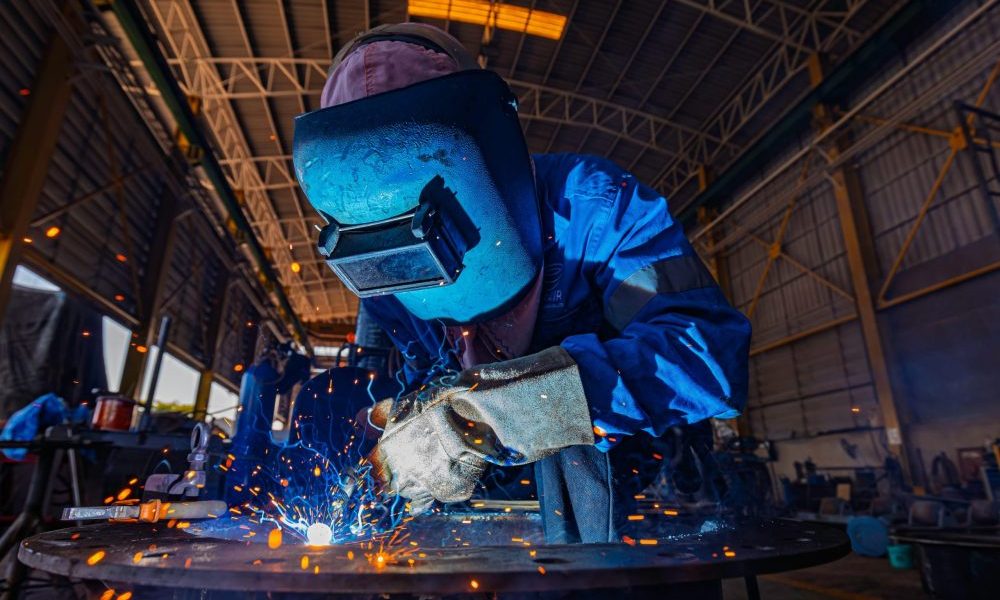
At its core, welding is the process of permanently joining two or more pieces of metal by applying intense heat, and sometimes pressure, to fuse them together. Think of it as the industrial world’s answer to glue, except the bond created is often stronger than the original materials themselves.
Welding is everywhere. It holds together the pipelines that carry water across cities, the pressure vessels that power industrial plants, the aircraft components that keep flights safe, and the heavy machinery that keeps factories running. If something is made of metal and expected to hold under pressure or stress, there is a very good chance welding was involved.
Are All Welds Created Equal?
Absolutely not, and this is one of the most important things a client can understand. A weld is only as good as the welder who lays it down and the process used to make it. A poor weld can crack under pressure, corrode over time, or fail entirely at the worst possible moment.
This is especially true when working with high-performance materials like titanium, Inconel, or Hastelloy – metals commonly found in aerospace, defense, and nuclear applications. These materials are not forgiving of shortcuts. They demand certified welders, controlled environments, and proven procedures.
That is why regulatory bodies and industry standards exist. Certifications like NADCAP (National Aerospace and Defense Contractors Accreditation Program for working with our aerospace and defense industries), ASME (include the explanation of this regulatory body and NAVSEA approved weld procedures (include the explanation of this regulatory body) are awarded only to shops that can demonstrate consistently high-quality welding under rigorous third-party audits. When a facility holds these NADCAP certification for fusion welding, it means their process has been independently verified, not just claimed. It means that the facility can be trusted to manufacture products that will keep members of our armed forces safe.
Why Does the Type of Welding Matter to You?
Different applications call for different welding processes. TIG welding (Tungsten Inert Gas) is known for precision and clean results, making it the go-to choice for thin materials or work that will be visible and inspected closely. MIG welding is faster and better suited for thicker materials. Submerged arc welding is used for heavy-duty industrial fabrication.
As a client, you do not need to master these distinctions, but you do need a partner who understands them deeply. Choosing the wrong process for the wrong material can result in costly rework, failed inspections, or worse.
What Should You Look for in a Welding Partner?
When evaluating a welding and fabrication partner, consider the following: Do they hold recognized certifications relevant to your industry? Do they have documented experience with the specific materials your project involves? Can they perform and document the necessary quality inspections, such as non-destructive testing?
Experience matters too. A shop that has spent decades working with exotic alloys for aerospace and nuclear clients brings a level of practical knowledge that cannot be replicated overnight.
How CMW Global Approaches Welding
CMW Global (Carver Machine Works) has been providing precision welding and metal fabrication from Washington, North Carolina since 1976. Over five decades, the company has built its reputation on the kinds of projects that most shops will not touch: exotic materials, critical applications, and tight tolerances.
CMW Global holds NADCAP certification for fusion welding, ASME U and R stamps for pressure vessel fabrication and repair, and operates under an AS9100D/ISO 9001 quality management system. These are not cosmetic credentials, they represent ongoing commitments to verified quality across every project.
The team works with titanium, Inconel, Hastelloy, and other specialty alloys for clients in aerospace, naval defense, nuclear, pulp and paper, mining, and chemical fields. Whether the need is new fabrication, equipment repair, or component restoration, the approach is the same: do it right, document it thoroughly, and stand behind the work. Reach out to Carver Machine Works today to speak with one of our specialists about the type of welding your project may require.
Have a project that requires precision welding or metal fabrication? Contact CMW Global to speak with an expert about your application.
 Skip to content