
How Do You Extend the Life of Critical Rotating Equipment?
When critical rotating equipment begins showing signs of wear, facility managers face pressure from equipment manufacturers to replace entire assemblies, often at premium prices with extended lead times. Original equipment manufacturers typically recommend complete unit replacement as their default solution, maximizing equipment sales while downplaying the viability of targeted component repair.
This replacement-focused approach serves the manufacturer’s profit model but rarely represents the most cost-effective or time-efficient solution for plant operators. Component-level refurbishment performed by experienced independent rebuilders can restore equipment to proper mechanical operation at a fraction of replacement cost, with significantly shorter turnaround times. With over five decades of specialized experience, CMW Global has developed proven refurbishment methodologies that address the actual mechanical failures in rotating equipment while keeping capital expenditures under control.
What Factors Typically Cause Rotating Equipment Failure?
Understanding specific failure mechanisms enables targeted repair strategies rather than wholesale equipment replacement. Three primary mechanical failure categories account for the majority of rotating equipment problems: bearing deterioration, shaft deflection, and corrosion damage.
Bearing Wear and Fatigue
Bearing failure represents the most common cause of rotating equipment breakdown.¹ Rolling element bearings experience contact fatigue as cyclic loading produces microscopic cracks in bearing raceways. These cracks propagate over time, eventually leading to spalling, the flaking away of bearing material that creates debris contamination and accelerated wear. Research shows that improper installation, inadequate lubrication, and contamination account for approximately 70-80 percent of premature bearing failures.²
Fretting corrosion presents another significant bearing degradation mechanism. When bearings experience inadequate interference fits, micro-movements between the bearing ring and shaft create oxidation at the contact surface. This characteristic red-brown discoloration indicates material transfer that loosens the bearing mount and accelerates wear. Abrasive wear from contaminated lubricants creates furrow-like scratches on bearing surfaces, while adhesive wear from metal-to-metal contact produces severe surface degradation under high loads or inadequate lubrication conditions.
When OEMs encounter bearing-related equipment failures, their standard recommendation typically involves replacing the entire pump, motor, or compressor assembly, even when only the bearings themselves require replacement. This approach maximizes equipment sales but forces customers to absorb costs for components still functioning within acceptable parameters.
Shaft Deflection and Mechanical Stress
Shaft deflection creates fatigue failures when bending loads cause shafts to deviate from their centerline during rotation. The deflection magnitude depends on shaft diameter, material properties, support locations, and applied loads. As shafts rotate under deflection, they experience alternating tensile and compressive stresses that eventually initiate fatigue cracks at stress concentrations.
Fatigue cracks typically initiate at stress concentrations such as keyways, shoulder fillets, or surface discontinuities. These geometric features create localized stress elevations that serve as crack initiation sites. Cracks propagate incrementally with each rotation cycle, eventually reaching critical size where sudden fracture occurs.
Misalignment between coupled equipment generates excessive shaft deflection and bearing loads. Angular misalignment creates moment loads that bend shafts, while parallel misalignment produces radial forces. Both conditions significantly reduce bearing life and can cause shaft fatigue failures. Industry standards establish alignment tolerances around 0.002 inches per inch (2 mils/inch) for precision shaft alignment to minimize these destructive forces.³
Equipment manufacturers facing shaft deflection problems routinely recommend complete rotor assembly replacement. Independent rebuilders can often restore proper function through targeted shaft repair, remachining, or in some cases, individual shaft replacement—preserving the housing, bearings, and ancillary components that remain mechanically sound.
Corrosion and Material Degradation
Corrosion attacks rotating equipment through multiple mechanisms depending on operating environment. Chemical process equipment faces aggressive media that degrades standard materials. Erosion-corrosion represents a particularly destructive combination where mechanical wear removes protective oxide films, exposing fresh metal to corrosive attack. This synergistic degradation occurs in pump impellers handling slurries or abrasive fluids.
Cavitation damage, resulting from vapor bubble collapse on metal surfaces, creates localized pitting that serves as stress concentrators. Rather than replacing entire pump assemblies experiencing cavitation damage, targeted weld repair of damaged impeller surfaces can restore mechanical function at significantly reduced cost.
CMW Global’s extensive industrial experience enables diagnosis of the specific mechanical issues affecting equipment operation. This detailed failure analysis supports component-level repair strategies that restore proper mechanical function rather than defaulting to complete assembly replacement.
What Refurbishment Techniques Restore Equipment to OEM Specifications?
The fundamental difference between OEM and independent rebuilder approaches centers on repair scope. When manufacturers disassemble failed equipment, their economic model favors replacing the entire assembly, maximizing parts sales and labor charges. Independent rebuilders focus on identifying and repairing only the failed components, substantially reducing both cost and turnaround time.
Component-Level Assessment and Selective Repair
CMW Global’s refurbishment process begins with comprehensive component assessment to determine which parts require repair or replacement versus those remaining mechanically sound. A pump experiencing bearing failure may have a perfectly functional impeller, shaft, and housing. Rather than replacing the entire assembly, targeted bearing replacement restores proper function while preserving serviceable components.
This selective repair approach delivers two critical advantages: reduced material costs from reusing functional components and dramatically shortened turnaround times. Manufacturing a complete new assembly requires weeks or months of production scheduling and fabrication. Repairing individual failed components can often be completed within days, minimizing production disruptions.
Reverse Engineering and Dimensional Restoration
When original equipment manufacturer documentation proves unavailable or equipment has been modified over years of service, reverse engineering provides the foundation for accurate component restoration. This becomes particularly critical for obsolete equipment where OEM support no longer exists.
CMW Global maintains extensive archives of drawings and dimensions accumulated over five decades of equipment service. This database provides rapid access to component specifications, eliminating time-consuming measurement and modeling for previously serviced equipment. When components are damaged beyond practical repair limits, reverse engineering expertise enables manufacturing replacement components from scratch, keeping equipment operational without system redesign or complete equipment replacement.
Precision Machining and Surface Restoration
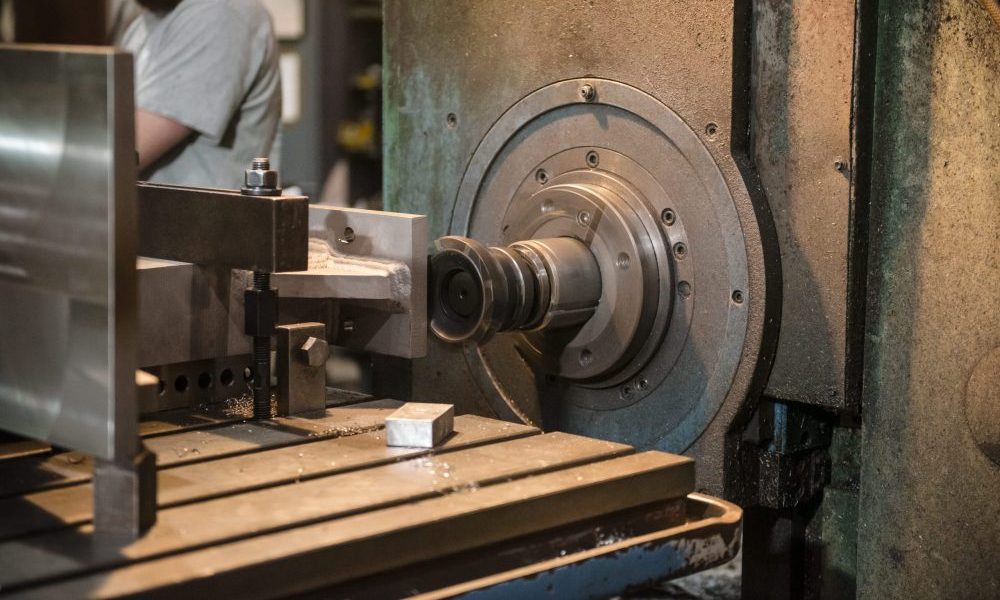
Precision machining restores dimensional accuracy and surface finish essential for proper mechanical function. Shaft journals worn by bearing friction require remachining to restore proper diameter and surface finish. Bearing housing bores that have experienced fretting corrosion need precise boring to restore interference fit specifications. Pump impeller wear rings demand careful machining to reestablish proper clearances.
Surface finish specifications prove particularly critical for rotating equipment. Bearing journals typically require surface finishes of 16 microinches RMS or better to prevent premature bearing wear. Mechanical seal faces demand even finer finishes to maintain effective sealing. Precision grinding operations achieve these demanding specifications while maintaining dimensional tolerances measured in ten-thousandths of an inch.
Weld Repair and Build-Up Processes
Specialized welding processes restore worn or damaged areas through controlled material deposition. Weld build-up effectively repairs shafts worn by seal rubbing, impellers damaged by cavitation, and housing bores enlarged by fretting. CMW Global’s proven weld practices address wear from fluid cavitation, excessive vibration, abrasion, and general service degradation.
Advanced welding techniques minimize heat input to prevent distortion and metallurgical damage. Controlled weld parameters and proper preheat/interpass temperature management maintain material properties while building up worn surfaces. This precision welding enables component restoration that meets original dimensional requirements, returning parts to proper mechanical function.
Dynamic Balancing and Alignment
Rotor balancing represents a critical refurbishment operation directly impacting equipment reliability. Unbalanced rotors generate excessive vibration that accelerates bearing wear and induces shaft fatigue. CMW Global’s balancing capabilities accommodate components up to six feet in diameter and 5,000 pounds, employing both static and dual-plane dynamic balancing techniques.
Field balancing services enable in-situ correction without equipment removal, minimizing downtime for large or difficult-to-transport machinery. CMW Global’s field service capabilities bring precision restoration techniques directly to customer facilities, supporting rapid turnaround during planned outages.
The Economic Reality: Repair vs. Replace
Equipment manufacturers structure their business models around new equipment sales and complete assembly replacement. When OEMs quote repair work, they typically recommend replacing entire assemblies because their parts departments, service networks, and profit margins align with this approach. This creates inherent conflict between the manufacturer’s economic interests and the customer’s need for cost-effective repairs.
Independent rebuilders operate under fundamentally different economics. Without new equipment sales driving revenue, these specialists focus on identifying and repairing only failed components. This component-level approach typically delivers equivalent mechanical function at 30-50 percent of OEM replacement costs, with turnaround times halved in comparison to OEM replacements.
CMW Global’s five decades of refurbishment experience across diverse industries provides comprehensive capabilities for equipment life extension. The combination of extensive dimensional archives, precision machining capabilities, advanced welding processes, and field service expertise enables restoration that returns equipment to proper mechanical operation. CMW Global holds critical certifications including ASME U and R stamps, AS9100D/ISO, and 9001:2015 approvals, ensuring refurbishment work meets the most demanding quality standards.
For organizations seeking to extend equipment service life while controlling maintenance costs, component-level refurbishment represents a proven strategy. Contact CMW Global to discuss how targeted repair of individual components can restore your critical rotating equipment to proper mechanical operation without the premium costs and extended delays associated with OEM assembly replacement.
References
¹ Erbessd Instruments. (2025). “Top 10 Machine Failures.” Retrieved from https://www.erbessd-instruments.com/articles/top-10-machine-failures/
² Bearing News. (2021). “The Most Common Causes of Bearing Failure.” Retrieved from https://www.bearing-news.com/the-most-common-causes-of-bearing-failure-and-the-importance-of-bearing-lubrication/
³ ANSI/ASA S2.75-2017. “Shaft Alignment Methodology.” American National Standards Institute. Retrieved from https://www.pumpsandsystems.com/new-ansiasa-shaft-alignment-standard-adopted
 Skip to content